


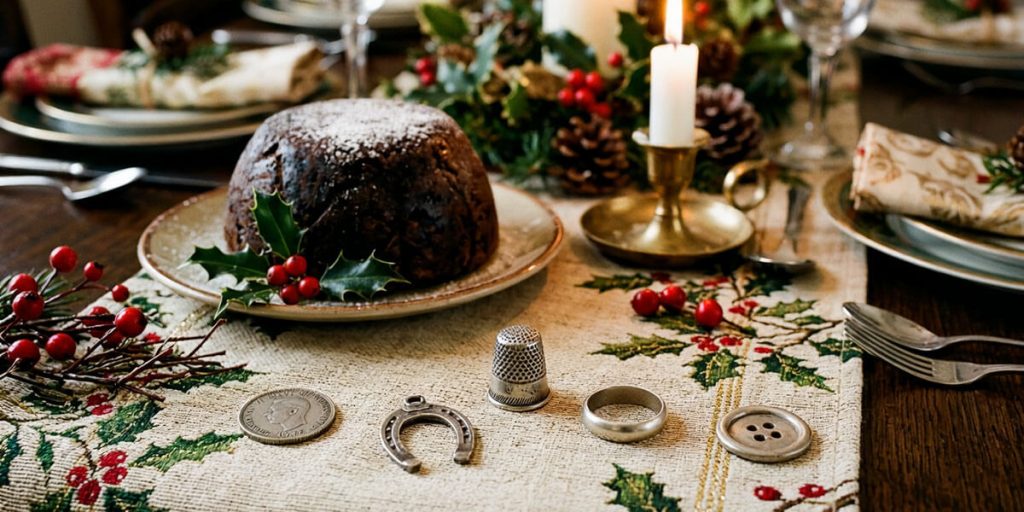
Christmas pudding is steeped in tradition, with roots going back many hundreds of years. One of the most treasured rituals for many is the hiding of charms inside the Christmas pudding.
Stirred into the mixture before the pudding is cooked, the charms lie hidden for many months before being revealed again when the pudding is cut open on Christmas day to the excitement of everyone around the table.
Perhaps the most famous of all the charms is the silver sixpence (or sometimes a threepenny bit) which brings the finder good fortune for the new year. A treasured find!
Some families also hide other charms, some with better fortunes for the coming year than others:
-
silver horseshoe or a wishbone for luck
-
a ring or a bell for marriage
-
a thimble for spinsterhood or thrift
-
a button for batchelorhood
-
A boot for a journey
-
An anchor for security or safe harbour
The tradition comes from the hiding of a bean in Twelfth Night cake, with the finder being crowned King or Queen for the night. Over time, in England, Twelfth Night cake was gradually replaced with Christmas Pudding and the bean with silver charms.
In Spain, Twelfth Night is still a celebrated occasion, complete with cake and bean!
Top top: If you are going to hide charms in your Christmas pudding, it’s best to wrap them in greaseproof paper so they’re not accidently swallowed. Always warn your dinner guests and don’t give any to small children.